Graduate Program: PhD in Epidemiology (2024)
Current Title: NRSA Postdoctoral Fellow, Department of Neurology, Perelman School of Medicine
Location: Philadelphia, Pennsylvania
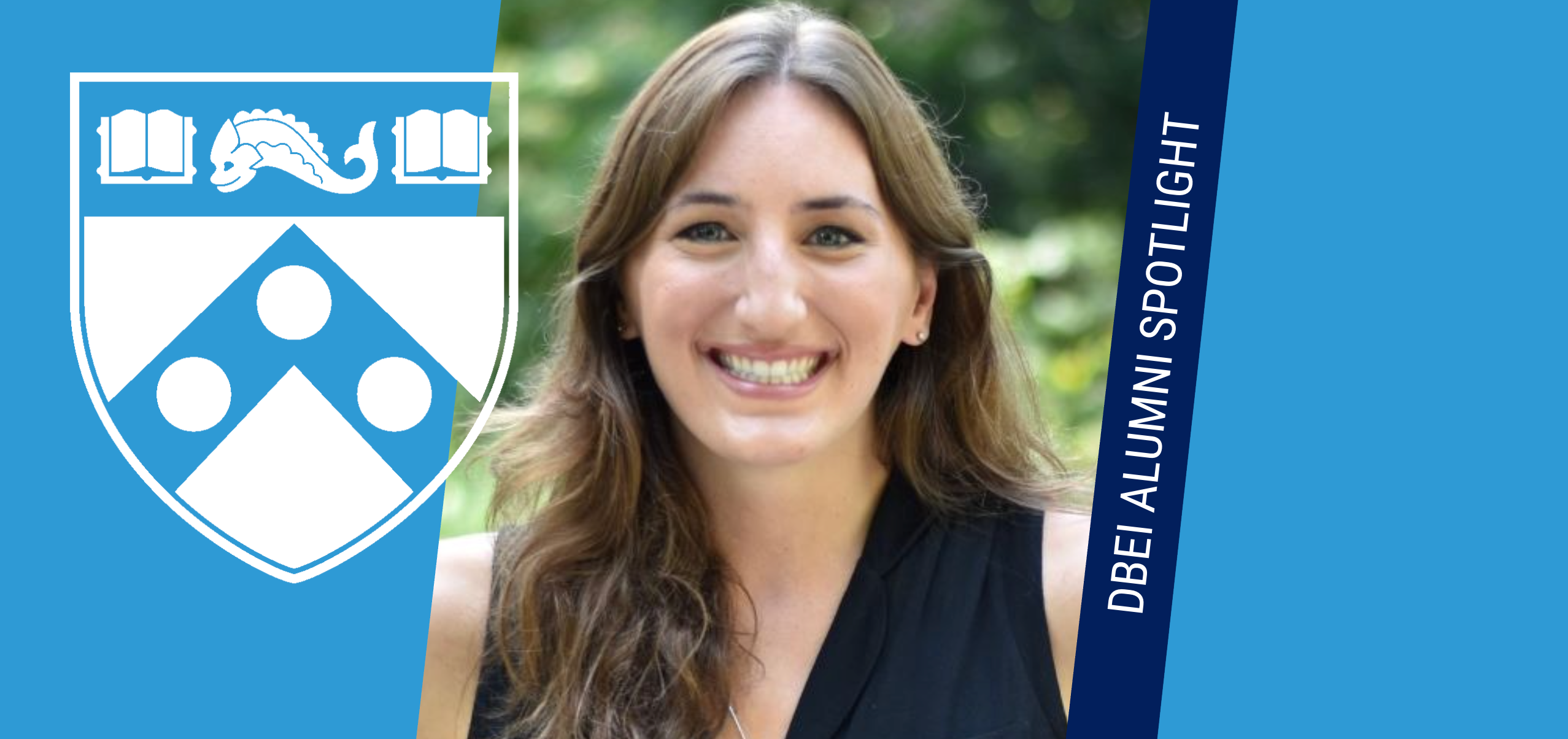
Bernadette D’Alonzo, PhD, MPH, is a 2024 graduate of the PhD in Epidemiology program, administered by the Graduate Group in Epidemiology and Biostatistics (GGEB) at the University of Pennsylvania. Before entering the PhD program, Dr. D’Alonzo earned a BA in Health and Societies, with a minor in Classical Studies, in 2015, followed by an MPH in 2017, both from the University of Pennsylvania. As a PhD student, she was mentored by her dissertation advisor, Douglas Wiebe, PhD, Professor of Epidemiology, and her committee chair, Andrea Schneider, MD, PhD, Associate Professor of Neurology and Epidemiology.
Today, Dr. D’Alonzo is an NRSA Postdoctoral Fellow in the Department of Neurology at the University of Pennsylvania.
We reached out to Dr. D’Alonzo to learn more about her current work and to invite her to reflect on her time as a PhD student in the Graduate Group in Epidemiology and Biostatistics at Penn.
Why did you choose the PhD in Epidemiology Program?
I chose to pursue my PhD in Epidemiology at Penn because it was the place where I had already built deep academic and professional roots. After earning two degrees at Penn and working within its research community, I had a strong sense of the people, mentorship, and collaborative environment that helped me grow. I knew the kind of work that motivated me, and I had already found mentors and colleagues who supported and challenged me in the right ways. Staying at Penn felt like the natural next step that allowed me to continue my training in a place that had shaped my interests, strengthened my skills, and made me excited about the impact I could have in epidemiology and health research.
What was the most meaningful part of your experience in the program?
The most meaningful part of my experience in the program was the sense of community I built, working closely with mentors and peers who genuinely supported my growth. This was not initially easy when my cohort started the program in the Fall of 2020. However, being surrounded by diverse people who challenged my thinking, shared their expertise, and encouraged my ideas made the work feel purposeful and collaborative. Those relationships shaped not only my training but also the way I approach work now.
What faculty member, mentor, or course was most influential for you and why?
The most influential courses for me were Dr. Yun Li’s Longitudinal and Clustered Data and Dr. Julie Szymczak’s Qualitative Methods. Dr. Li’s course deepened my understanding of complex data structures and strengthened the analytical skills I rely on in my research, while Dr. Szymczak’s class opened up a new way of thinking about how to capture and interpret human experiences. Both courses pushed me to broaden my methodological toolkit and shaped how I now approach questions from multiple angles, making them some of the most meaningful parts of my training.
What is a typical day like in your role as NRSA Postdoctoral Fellow?
A typical day as an NRSA Postdoctoral Fellow involves a mix of independent research, collaboration with mentors, and developing new skills to support my long‑term career goals. I usually start by reviewing ongoing analyses or manuscripts, followed by focused time on data work, writing, or preparing abstracts and grant materials. I meet regularly with my mentors and research teams to discuss study progress, troubleshoot challenges, and plan next steps. I also spend part of my week attending seminars, workshops, or lab meetings that help me strengthen my methodological training and stay connected to the broader research community.
What do you value most about your current role?
What I value most about my current role as an NRSA Postdoctoral Fellow is the combination of independence and support it offers. I have the space to pursue my own research questions, deepen my methodological skills, and develop my scientific voice, while still having access to incredible mentorship and collaborative opportunities.
What is on the horizon for you in terms of your career goals or research path?
Looking ahead, a major goal of mine is to become an independent investigator and an aging/injury epidemiologist. I’m especially focused on implementing novel statistical methods to better understand traumatic brain injury (TBI) across the life course and its long‑term implications for cognitive aging and ADRD‑relevant outcomes in older adults. I’m working toward building a research program that bridges innovative methods with clinically meaningful questions, ultimately contributing to earlier identification, improved prevention strategies, and better long‑term outcomes for individuals affected by TBI.